

Beyond the Classroom: Trinity Students Gain Early Surgical Experience Through World Pediatrics Missions

For medical students, understanding a disease in a lecture is only the beginning. Seeing how physicians evaluate patients, explain treatment options, and make decisions in the operating room brings those lessons to life. Through its partnership with World Pediatrics, Trinity School of Medicine provides students with opportunities to observe pediatric surgical missions at Milton Cato Memorial Hospital in Saint Vincent and the Grenadines, offering valuable early exposure to clinical care.
During the January and February 2026 missions, Trinity students had the opportunity to observe general and plastic surgery teams as they provided specialized surgical care to patients. From preoperative evaluations and conversations with families to surgical procedures and anesthetic management, these experiences offered a closer look at the collaboration, preparation, and clinical judgment involved in patient care.
For students still in the early stages of medical school, these opportunities can help bridge the gap between foundational science coursework and the realities of clinical practice.
Observing General Surgery: Understanding the Team Behind Patient Care
During the January 2026 World Pediatrics General Surgery mission, Term 2 student Sajjad Kamil shadowed Dr. Lukish and his team, gaining insight into the preparation and coordination required to deliver surgical care.
One aspect that stood out was the level of planning behind each mission. The visiting team brought supplies and equipment selected to meet the needs of the children they would treat, illustrating how successful surgical care depends on much more than the procedure itself. Preparation, resource management, and coordination among healthcare professionals all contribute to creating a safe and effective environment for patients.
Sajjad also observed both the surgeon and anesthesiologist, gaining a broader perspective on the distinct responsibilities involved in caring for surgical patients. Following patients through different stages of care helped him recognize the importance of continuity and teamwork beyond the operating room.
Reflecting on the experience, Sajjad noted that seeing the preparation firsthand gave him a better understanding of “the amount of preparation that goes into caring for each child.”
This kind of observation can be particularly meaningful for early medical students. As they study anatomy, physiology, and other foundational sciences, witnessing how a surgical team applies that knowledge offers a practical context for what they learn in the classroom. It also helps students appreciate that patient outcomes depend on the combined expertise of an entire care team.
Exploring Plastic Surgery: Seeing Medical Concepts in Practice
During the February 2026 World Pediatrics plastic surgery mission, Leen Alshrouf built on an earlier orthopedic mission experience from June 2025. During that first trip, Leen had the opportunity to scrub in for a surgical procedure for the first time as a first-year medical student. Reflecting on the experience, Leen shared, “Being able to connect the growth plate anatomy we had studied to what was being done surgically made the case much more meaningful.” Returning for a second mission provided another opportunity to connect classroom concepts with patient care while exploring a different surgical specialty.
During clinic visits, Leen observed how physicians evaluated patients before surgery, discussed diagnoses with families, and explained treatment plans. These conversations highlighted an essential part of medicine that can be difficult to fully appreciate through textbooks alone: physicians must not only understand a patient's condition but also communicate clearly and help families understand the decisions ahead.
In the operating room, several procedures demonstrated the relationship between foundational medical science and surgical treatment. Observing a gynecomastia case, for example, helped Leen connect the hormonal mechanisms covered in the endocrine module with the physical changes that can sometimes require surgical intervention.
As Leen explained, seeing the condition treated surgically made the concepts from lecture much easier to understand.
The experience also introduced Leen to the broader goals of plastic surgery through observations of keloid treatment and burn contracture management. These procedures illustrated how surgical care can address not only appearance but also functional limitations, mobility, and quality of life.
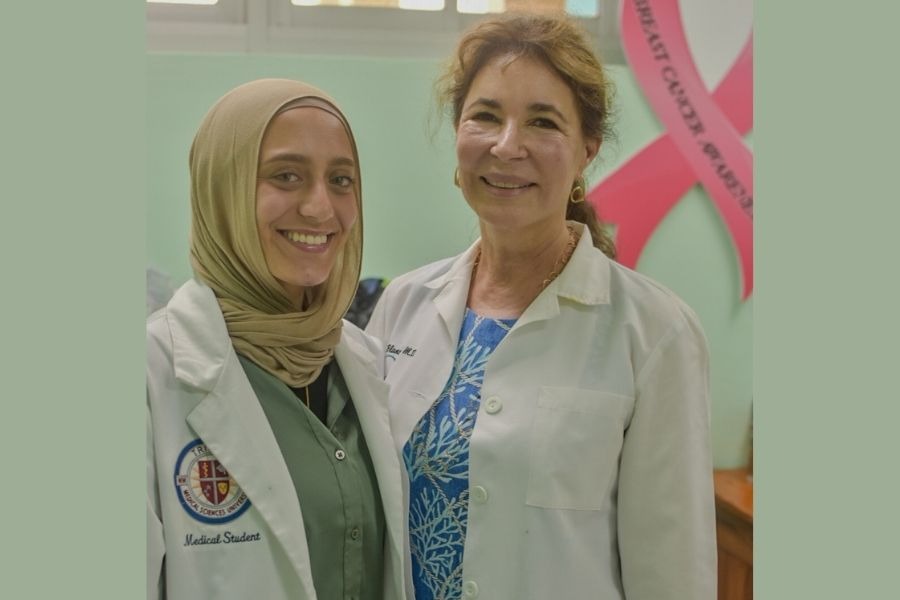
Throughout the day, Dr. Blanchet and resident Dr. Knighton explained relevant anatomy, discussed their clinical reasoning, and answered questions about the procedures. Leen also spent time observing the anesthesiologist, learning more about monitoring, anesthetic management, and patient safety.
Exposure to these different roles offered a more complete picture of surgical care while introducing new areas of potential interest. For Leen, the experience strengthened an existing interest in surgery while also sparking curiosity about endocrinology and anesthesiology.
Why Early Clinical Exposure Matters
Clinical experience is an important part of medical education, but opportunities to observe patient care before the traditional clinical years can offer particular value. For students in the foundational sciences, surgical missions provide an opportunity to see how the concepts they are learning translate into real clinical decisions.
Connecting theory with practice. Observing a condition discussed in class helps students understand how anatomy, physiology, and disease processes inform diagnosis and treatment. These experiences can make complex concepts more tangible and give students a clearer understanding of why foundational science matters in clinical medicine.
Developing a broader understanding of patient care. Surgery involves more than the procedure itself. Preoperative assessments, discussions with patients and families, anesthesia, postoperative care, and follow-up all contribute to the treatment process. Observing these stages helps students recognize how different healthcare professionals work together to support patients.
Exploring specialties and career interests. Early exposure allows students to see the day-to-day responsibilities of physicians across different specialties. Whether observing general surgery, plastic surgery, or anesthesiology, students can begin identifying the areas of medicine that interest them and the questions they want to explore further.
Learning through observation and mentorship. Watching experienced physicians explain their reasoning and respond to questions gives students insight into clinical judgment and professional practice. These interactions also encourage curiosity, critical thinking, and a deeper appreciation for the responsibility involved in caring for patients.
For Leen, participating in two World Pediatrics missions reinforced the value of these opportunities. As a second-year student, Leen appreciated being able to experience clinical environments and operating rooms earlier than would typically be possible through the standard curriculum alone.
The experience helped bring classroom learning into focus while offering a more informed perspective on possible future specialties.
A Partnership That Extends Learning Beyond the Classroom
The World Pediatrics missions at Milton Cato Memorial Hospital reflect the value of collaboration between Trinity School of Medicine and organizations working to expand access to specialized pediatric care.
Through this partnership, students gain opportunities to observe healthcare professionals delivering care while learning more about the preparation, teamwork, and clinical decision-making that support surgical treatment. At the same time, the missions contribute to efforts to connect patients and families with specialized medical services.
For Trinity students, these experiences reinforce an important lesson: medicine requires both a strong foundation in science and an understanding of how that knowledge is applied to individual patients. Observing clinicians in practice helps students begin developing that perspective early in their education.
As Sajjad reflected on the general surgery mission, the experience was “very meaningful,” and one for which he was grateful. Leen similarly expressed an interest in continuing to participate in future missions, building on the knowledge and perspective gained through these early clinical experiences.


